Commercial roof insulation is easy to overlook because the membrane is the visible part of…
Retail and Office Space Commercial Roofing
For managers of strip malls, shopping centers, medical complexes, and office plazas, the roof is rarely top of mind until it starts making itself known. A ceiling stain over a storefront. A drip near a reception desk. A tenant calling before sunrise because water found its way into inventory, drywall, or lighting. In busy retail properties, roof problems do not stay politely overhead. They turn into complaints, service calls, safety concerns, and sometimes lost revenue.
That is why the real question is not just whether a roof needs attention. It is whether the work can happen without rattling tenants, driving off customers, or turning a normal weekday into a construction spectacle. For many property managers and property owners, that concern is bigger than the roof itself. They picture blocked parking, loud tear off work, sticky asphalt smells drifting into occupied suites, and frustrated tenants wondering why the project was not planned better.
At Shain Roofing & Sheet Metal, commercial roofing is approached with the understanding that occupied retail environments are a different animal. A shopping center is not an empty warehouse. An office plaza is not a vacant shell. These are active commercial properties with constant foot traffic, shared entrances, delivery lanes, customer expectations, and multiple businesses trying to operate at once. The roof work has to solve the roofing problem without creating a business problem.
Why shopping centers demand a different kind of roofing plan
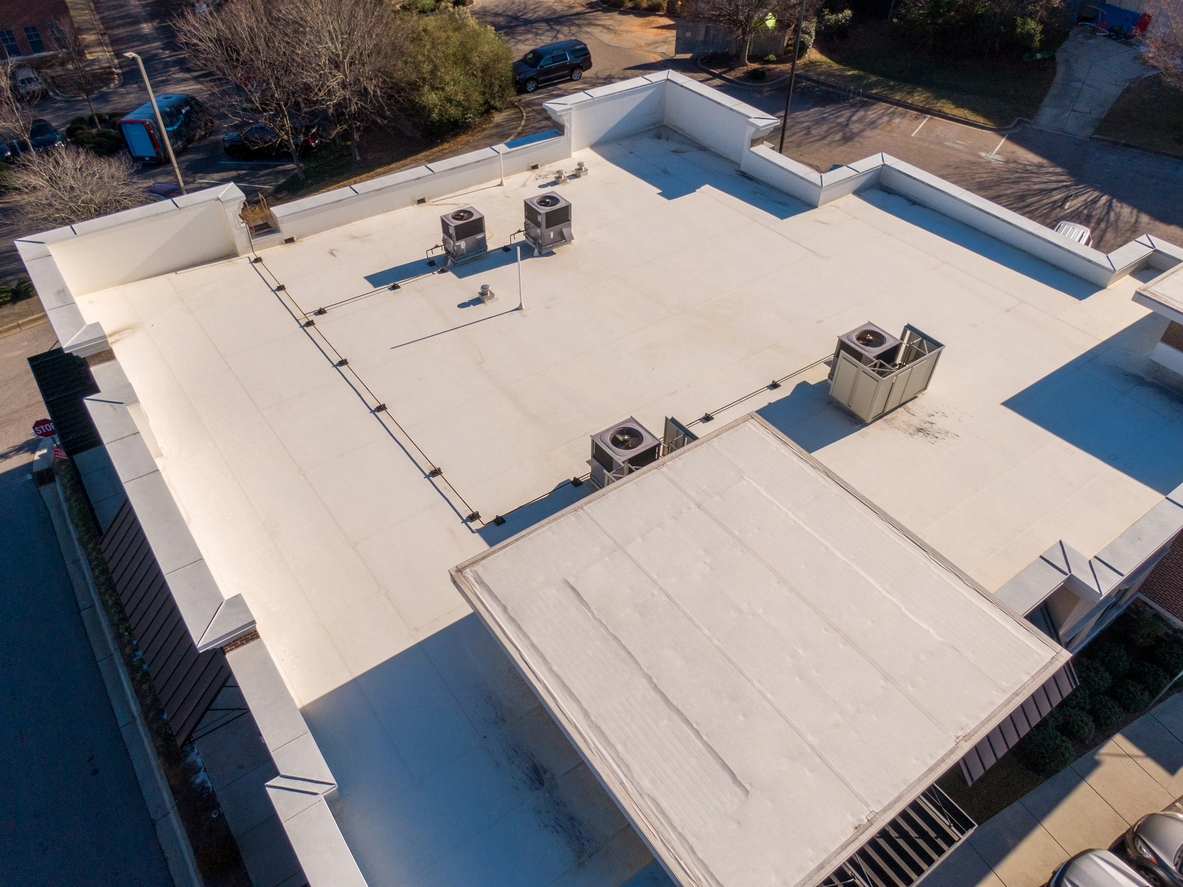
A roof over shopping centers works harder than many people realize. It covers long spans, mixed tenant layouts, rooftop equipment, signage penetrations, drainage challenges, and often a patchwork of old repairs layered over years of use. Add Michigan weather, freeze-thaw cycles, wind, ponding water, and seasonal storm damage, and the roof can start showing wear in ways that seem small at first but spread quickly.
Shopping center roofing also comes with a unique operational burden. In retail centers, a single roof section may protect a salon, a restaurant, a clinic, and a national chain all in one run. Each tenant has different hours, different sensitivity to noise and odor, and different tolerance for disruption. A roofing contractor working on these sites has to think beyond the membrane and the flashing. The job has to account for access, customer flow, safety barriers, loading areas, and communication with people who are trying to keep their business open.
The fear behind every major roofing project
Most building managers are not afraid of the invoice alone. They are afraid of what comes with it. They worry that a roof replacement will spook tenants, frustrate customers, and turn a routine capital improvement into a public relations problem. That fear is not irrational. On the wrong jobsite, it happens.
Hot asphalt odors can drift into occupied suites. Dumpsters can eat up vital parking spaces. Loose debris can make a property look neglected. Poorly timed work can interfere with lunch rushes, medical appointments, or office traffic. And if the roofing contractor does not offer clear communication, tenants start filling the silence with their own assumptions. Suddenly, a planned improvement feels like chaos.
commercial roofer shopping centers: what managers should actually look for
When evaluating a commercial roofer shopping centers managers should focus less on sales language and more on operational discipline. Not every commercial roofing contractor is built for occupied retail properties. Some are fine on open commercial construction sites but struggle when the roof sits over active tenants and public-facing storefronts.
The right commercial roofing contractor knows how to phase work, protect access, and keep the site clean enough that customers barely notice a project is underway. That means practical scheduling, smart material selection, disciplined crews, and a team that understands retail environments. A roof can absolutely be upgraded with minimal disruption, but only if the planning is as strong as the installation.
Strip malls and office plazas cannot afford sloppy logistics
In office buildings and neighborhood retail properties, perception matters almost as much as performance. If customers pull in and see cones, clutter, trash, and blocked storefront visibility, they may keep driving. If tenants feel blindsided, they remember the inconvenience more than the finished result. In places with multiple businesses under one roof, a poorly run project can create friction between tenants and management fast.
That is why shopping center roofing should be handled like a live operation, not a closed set. Work zones need to be controlled. Parking impacts need to be limited. Material staging needs to be deliberate. Crews need to keep the property presentable every day, not just at final cleanup. A roof project should not make a well-run property feel like it has gone off the rails.
Scheduling around tenants instead of through them
One of the biggest advantages in retail and office commercial roofing is strategic scheduling. The best roofing solutions are not just technical. They are operational. On occupied sites, schedule matters.
For many shopping centers, off-hours work is the difference between a smooth project and a daily headache. Early morning starts, weekend phases, or work sequenced around tenant peak hours can reduce noise and access conflicts. A medical complex may need extra quiet near certain suites during patient hours. A restaurant may need parking and entry routes protected during lunch and dinner. A retail center may need visible storefront access preserved during weekends, even if roof work continues elsewhere.
This type of planning protects tenants and customers while allowing the project to keep moving. It also helps property managers maintain trust. When tenants see that the schedule was built with their business in mind, the whole project feels more controlled.
Low-odor systems make a real difference in occupied retail environments
One of the most common worries in shopping centers is smell. And for good reason. Traditional hot-applied roofing materials can create odors that drift into occupied units, which is especially problematic in medical offices, salons, food service spaces, and customer-facing retail environments.
That is why many commercial roofing services for occupied buildings lean toward low-odor options such as single ply roofing, cold-applied assemblies, and coating-based roofing solutions where appropriate. Single ply roofing systems like TPO, PVC, and EPDM are often a popular choice for retail properties because they can support energy efficiency, limit odor concerns, and deliver durability on flat or low-slope roof areas.
Using the right materials is not just about the finished roof. It is about making the installation process easier on tenants and customers. In many cases, low-odor systems help the public remain blissfully unaware that major work is happening overhead.
Choosing the right roofing materials for retail properties
The right materials depend on the building, existing roof condition, drainage, insulation needs, and long-term budget goals. There is no one-size-fits-all answer for shopping center roofing, because a small strip center and a large mixed-use plaza do not behave the same way.
A knowledgeable roofing contractor will assess the roof deck, penetrations, age, moisture conditions, and traffic patterns before recommending roofing materials. In some cases, a cost effective repair and maintenance strategy can extend service life. In others, a new roof or full replacement is the smarter move. Good recommendations are based on performance, not guesswork.
When repair is smarter than replacement
Not every issue calls for a complete roof replacement. In many commercial properties, targeted commercial roof repair can buy time, stabilize vulnerable areas, and prevent leaks from spreading into occupied suites. If the system is still structurally sound, repair may be the most practical path.
That said, shopping centers often suffer from years of piecemeal fixes. One leak gets patched, then another. Flashing is addressed in one spot while wet insulation remains elsewhere. Eventually, repeated repair starts costing more than a planned replacement. The trick is knowing when repair still makes sense and when it is simply delaying a larger problem.
Small issues do not stay small for long
In retail properties, small issues have a way of multiplying in the dark. A seam opens. Water travels. Insulation gets wet. A tenant notices a stain three units away from the actual entry point. By the time the leak becomes visible inside, the roof may have been quietly deteriorating for months.
That is why maintenance matters so much in shopping centers. Regular inspections help commercial roofers assess weak points before they become emergency calls. Preventive maintenance can extend roof life, reduce leaks, and help property owners avoid sudden disruptions. A roof that is monitored consistently is much less likely to demand a dramatic midseason rescue.
Commercial roof repair in active shopping centers
Commercial roof repair in occupied retail centers requires a different rhythm than repair on a vacant site. The crew has to move with purpose but also with restraint. Access routes need to stay open. Noise needs to be controlled where possible. Safety needs to be visible and real, not just promised.
At Shain Roofing & Sheet Metal, commercial roofing services are built around the reality that tenants are trying to work while the roof is being repaired. That means containing debris, protecting entrances, and keeping the jobsite orderly. A clean site sends a message: this project is under control.
Roof replacement without panic
A roof replacement does not have to feel like a siege. On well-run projects, customers still park, tenants still open on time, and the public hardly registers the work beyond an occasional service vehicle. That outcome does not happen by accident. It comes from planning every phase before the first bundle is moved.
For shopping centers, replacement often needs to be broken into manageable sections. Instead of overwhelming the entire property, the project can be phased to preserve access and reduce visual clutter. Tear off areas can be isolated. Deliveries can be timed. Parking impacts can be minimized. The goal is simple: keep the property functioning while the new roof takes shape overhead.
Clean jobsites protect both safety and reputation
A messy roof job does more than look bad. It creates hazards for tenants, customers, and maintenance staff. Nails, scraps, packaging, and unsecured materials have no place in customer parking lots or pedestrian areas. In retail environments, cleanliness is part of safety.
It is also part of reputation. Property managers know that customers judge what they see. If a plaza looks disorganized, people assume management is disorganized too. That is why disciplined cleanup matters every single day. Not at the end of the week. Not at substantial completion. Daily.
Energy efficient roofing matters in large retail centers
For larger shopping centers and office plazas, energy efficiency is not a buzzword. It is an operating cost issue. Roofing systems with reflective surfaces, upgraded insulation, and reduced heat gain can lower cooling demands and improve comfort for tenants.
An energy efficient roof can also support longer-term asset planning. In many retail centers, HVAC systems already work hard because of frequent door openings, varied tenant loads, and broad roof exposure. Better insulation and reflective materials help maintain more stable interior conditions. Over time, that can make a meaningful difference in building performance.
How maintenance helps extend roof life
A good maintenance program is not glamorous, but it is one of the most cost effective tools property managers have. Regular service visits can identify punctures, seam issues, drainage problems, flashing wear, and early leaks before they become tenant-facing headaches.
Maintenance also helps extend the life of roofing systems by catching damage after storms, equipment service, or seasonal expansion and contraction. In shopping centers, where rooftop traffic from HVAC technicians and other vendors is common, those checkups matter. A roof is not static. It is part of a working building.
Storm damage, leaks, and the insurance claim question
Michigan weather can be rough on commercial roofing. High winds, snow loads, freeze-thaw cycles, and sudden storm damage can all push an aging roof past its limit. When damage is severe, property managers may need documentation to support an insurance claim.
An experienced roofing contractor can assess visible damage, identify likely points of water entry, and provide the information needed to move the process forward. That does not mean every issue becomes an insurance claim, but when storm-related damage is involved, good documentation matters. Fast response matters too, especially when leaks threaten tenants and interior finishes.
Why clear communication keeps tenants calm
On occupied projects, silence breeds frustration. Tenants do not need a daily novel, but they do need clear communication. They need to know when crews will be on site, what areas may be affected, and whether any noise, access, or odor concerns are expected.
Clear communication also helps property managers stay ahead of complaints instead of reacting to them. A short notice about schedule changes, parking adjustments, or repair phases can prevent confusion. In shopping centers with multiple businesses, communication is not a courtesy. It is part of the service.
What property managers should ask a roofing contractor
Before hiring a roofing contractor for shopping center roofing, ask practical questions. How will the schedule protect tenants? What materials are best for occupied suites? How will the crew maintain safety in customer-facing areas? What is the cleanup plan? How will communication be handled during the project?
Also ask about experience with retail properties, medical complexes, big box stores, and office plazas. These sites require more than installation skill. They require judgment. A contractor can have decades in the industry and still not be the right fit for active retail environments if the operational side is weak.
The value of a family-run commercial roofing contractor
Shain Roofing & Sheet Metal brings a family-run approach to commercial roofing that fits the needs of occupied properties. The company has decades of experience serving Southeast Michigan, with a reputation built on accountability, safety, and quality workmanship. That matters when your roof project sits over paying tenants and daily customer traffic.
For property owners and managers, trust is not abstract. It shows up in whether the crew arrives prepared, whether the site stays clean, whether the schedule is respected, and whether the work is done with top quality workmanship. A roofing contractor should not create more problems than it solves.
Better business bureau reputation and professional confidence
When selecting among commercial roofers, managers often look for signs of consistency and professionalism beyond the estimate itself. A strong better business bureau profile, or positive standing with the business bureau, can help reinforce confidence that the company takes service seriously.
That should never replace direct evaluation of the team, but it is one more piece of the picture. For major work on shopping centers, clients want transparent pricing, dependable service, and a company that stands behind the job after installation, repair, or replacement is complete.
Retail roofing should feel almost invisible to the public
That is the standard many shopping centers should expect. The best retail roofing projects are not the loudest or the most visible. They are the ones that solve leaks, improve durability, support energy efficient performance, and protect the property without disrupting the people underneath.
Customers should still find parking. Tenants should still welcome visitors. Offices should still function. The roof work should feel more like a disciplined background operation than a public event. When handled correctly, a major project can be smooth enough that the average visitor never thinks twice about it.
A practical path forward for shopping center roofing
If your retail center, office plaza, or medical complex is dealing with leaks, aging materials, recurring repair calls, or signs that the roof is nearing the end of its useful life, now is the time to assess options. Whether the right answer is maintenance, commercial roof repair, or a full roof replacement, the process should begin with a realistic evaluation of the roof and the property’s daily operational needs.
Shain Roofing & Sheet Metal provides commercial roofing services tailored to active retail properties across Southeast Michigan. From low-odor roofing solutions and phased installation planning to clean jobsites, safety-first execution, and clear communication, the focus stays where it should: protecting the roof without disrupting the business below. If you need a roofing contractor that understands shopping centers, tenants, customers, and the real-world demands of occupied commercial properties, contact the team to schedule an assessment.
Related Posts