Commercial roof insulation is easy to overlook because the membrane is the visible part of…
How to Clean Commercial Roof Drains to Prevent Catastrophic Clogging
On a commercial roof, the drain is easy to ignore right up until it becomes the most important part of the entire building. One grate gets buried under wet leaves, one collector box fills with dirt and nesting material, one downspout line stops carrying water, and suddenly a manageable maintenance issue turns into a spreading pond across the roof surface. That is how small debris problems become expensive roof leaks.
For many commercial buildings, especially those with flat roofs or low-slope assemblies, roof drains are the front line of the entire drainage system. Their job is simple: collect water and move it off the roof before it can pool, back up, or force its way into seams, penetrations, flashing details, and wall transitions. When that process is interrupted, the roof starts holding weight it was never meant to hold for long.
Knowing how to clean commercial roof drains the right way helps protect roofing materials, reduce drainage issues, and avoid emergency calls during heavy rain. It also helps facility managers and maintenance teams spot early warning signs before a minor clog becomes a deep backup somewhere inside the drain pipes. In Southeast Michigan, where fall debris, freeze-thaw cycles, and winter snowmelt can all stress a commercial roof in a short stretch of time, this kind of roof maintenance matters more than most owners realize.
Why commercial roof drains clog so fast
A commercial roof does not have to look filthy to have a drain problem. In fact, some of the worst clogs start with a thin, innocent-looking ring of debris around the drain opening. Leaves from nearby trees, windblown trash, gravel fines, dirt, roofing granules, bird nesting material, and other debris all tend to migrate toward low spots where water naturally wants to collect. Once enough buildup gathers, the drain slows down, then traps even more debris, and the problem compounds.
Flat roofs are especially vulnerable because they rely on carefully planned drainage rather than steep slope and gravity alone. Water has to be directed across the roof surface toward drains, scuppers, gutters, collector boxes, or a downspout connection. If any part of that drainage system is obstructed, water pooling begins. In a heavy rain, that standing water can spread fast and create pressure on seams and flashing details that were performing just fine the day before.
Birds make the situation worse in ways people do not always expect. Roof drains, scuppers, and collector boxes are commonly found near parapet walls and protected corners where nesting birds like to gather twigs, feathers, and loose material. Add a little dirt, a little plant growth, and a few weeks of neglect, and you have the makings of a stubborn clog that no rainfall is going to magically wash away.
What happens when the drainage system backs up
When roof drains stop moving water efficiently, the first visible symptom is usually ponding water. The second is often damage that no one notices until it has already traveled inside the building. Water does not politely stay where it lands. It finds seams, fastener penetrations, membrane edges, expansion joints, and tiny weaknesses in the system. On an EPDM or TPO commercial roof, prolonged exposure to ponding water can accelerate wear and increase the odds of leaks around vulnerable details.
The real danger is not just the water you can see. It is the hidden load and the hidden path. A blocked drain can lead to water stacking up around mechanical curbs, slipping beneath flashing edges, saturating insulation, or backing into drain pipes and interior lines. During heavy rain, this can turn into interior leaks, stained ceilings, damaged inventory, slippery walkways, and costly business interruption. In winter, trapped water can freeze, expand, and make the next thaw even messier.
That is why roof drain cleaning is not cosmetic roof cleaning. It is functional maintenance. It protects the building, preserves the roof, and helps extend the service life of the entire drainage system.
The basic workflow to clean commercial roof drains safely
If your in-house team handles light commercial drain maintenance, the goal is to clean the area without damaging the roof membrane or forcing debris deeper into the system. The safest process is usually slower and more deliberate than people expect. Think careful handwork, not aggressive stabbing, scraping, or jamming tools into every hole you see.
Start with access and safety. Before anyone steps onto the commercial roof, confirm safe roof access, weather conditions, fall protection needs, and traffic paths. Wet membranes, frost, loose debris, and rooftop equipment can make even a simple cleaning task risky. If conditions are poor, wait. A rushed trip onto a slick roof creates more problems than it solves.
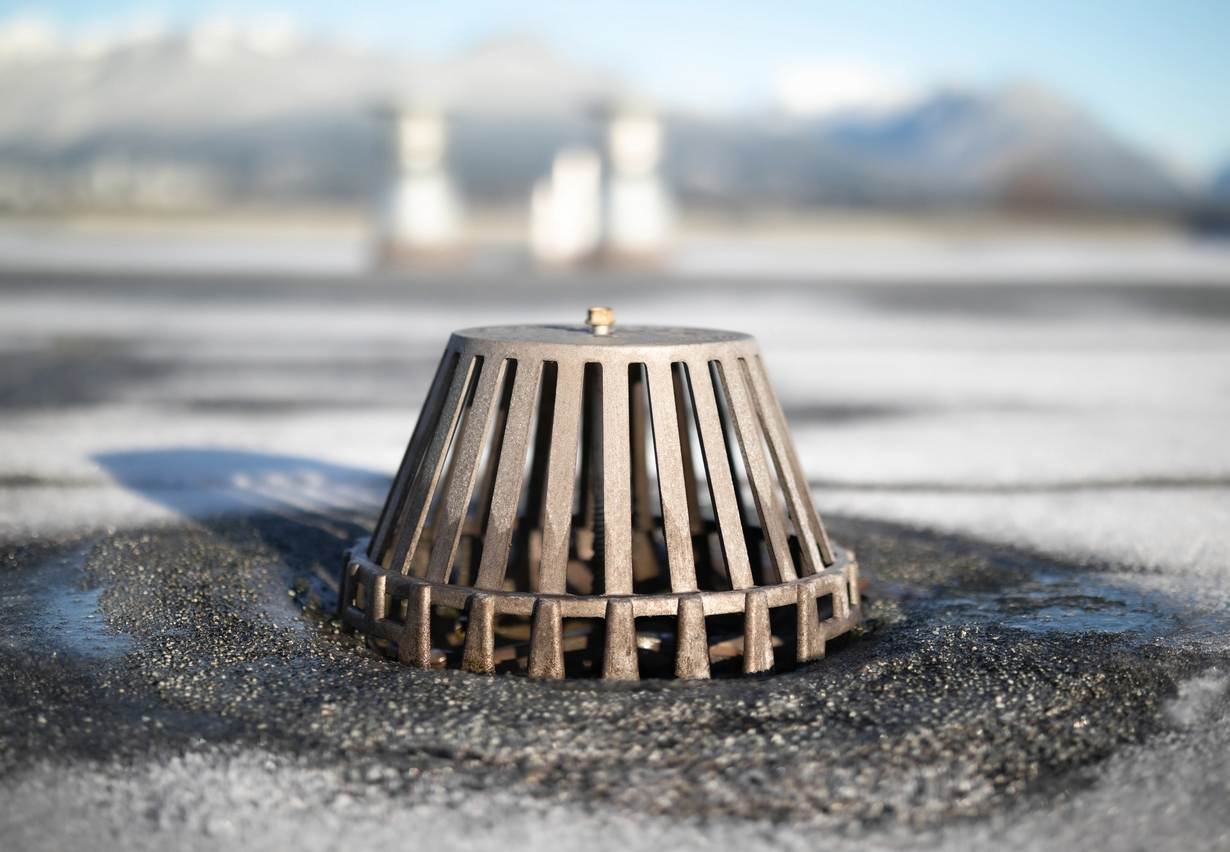
Once on the roof, inspect the roof surface around each drain, scupper, collector box, and gutter connection. Look for visible debris, dirt, sediment, leaves, branches, bird nests, and signs of water pooling. If the drain has a dome strainer or cover, inspect around it first. In many cases, the clog is not deep inside the pipes at all. It is right at the top, where buildup has sealed the opening like a wet paper mâché cap.
Step 1: Remove loose debris by hand
Begin with removal of loose debris by hand while wearing appropriate gloves. Gather leaves, trash, nesting material, and dirt from around the drain and place it into a bucket or disposal bag. Do not sweep everything toward the drain opening. That is the maintenance equivalent of shoving crumbs under the rug.
This part of roof cleaning matters because debris sitting within a few feet of the drain tends to migrate back the moment the next storm arrives. Clean a wider area, not just the hole itself. On flat roofs, cleaning a radius around each drain helps restore water flow and makes future inspections easier. It also gives you a clearer view of whether the drain is actually functioning or just temporarily uncovered.
If gutters or a connected downspout serve part of the same drainage route, check those too. Roof drains do not work in isolation. A clean drain connected to blocked gutters or a clogged downspout can still leave the roof holding water.
Step 2: Lift the strainer carefully and inspect the opening
After surface debris is removed, carefully lift or open the drain strainer if the system allows it. Some strainers are secured, and some are more delicate than they look. Avoid prying in a way that tears surrounding roofing materials. This is especially important on rubber membrane systems and thermoplastic membranes, where careless tool use can puncture or gouge the roof.
Inspect the drain opening for sludge, compacted buildup, roofing fragments, or a visible blockage. If the top of the drain is packed with wet organic matter, remove it by hand or with a soft, non-sharp plastic scoop. Never use a screwdriver, metal hook, roofing knife, or any improvised tool that can puncture the membrane around the drain bowl. One careless jab can turn a cleaning visit into a repair call.
This is also the point where you should inspect for signs that the drain has been holding water for too long. Rust, staining, softened sealant, membrane wrinkles, and dark rings around the drain can all point to recurring drainage issues.
Step 3: Flush with controlled washing, not brute force
Once visible debris is cleared, test the drain with controlled washing. A bucket of water or low-pressure hose can help confirm whether the drain is moving water properly. The key word here is controlled. You are checking flow, not pressure-washing the drain into submission.
If water enters and disappears normally, the upper portion of the system is likely clear. If water swirls, hesitates, or begins to pond around the opening, there may be a clog farther down in the drain pipes. Stop there before someone decides to “solve” the issue by ramming a rigid rod into the line. That is how drain components get damaged and surrounding membranes get repaired sooner than planned.
Washing the area around the drain can also help reveal whether low spots are causing persistent ponding water even after cleaning. If the roof continues to hold a pond after the drain is clear, the issue may involve slope, insulation settlement, or structural movement rather than simple debris accumulation.
Step 4: Check scuppers, collector boxes, gutters, and downspout routes
A complete roof drain cleaning process should include every visible exit point where water is supposed to leave the roof. Scuppers can clog with leaves and nesting material. Collector boxes can fill with dirt and sediment. Gutters can develop buildup that hardens over time. A downspout can look open at the top while being blocked lower in the line.
Inspect each component for free flow and clear passage. The drainage needs of one building may rely on interior drains and gravity-fed pipes, while another may use scuppers, exterior gutters, or siphonic drains. Siphonic drains are designed differently than standard gravity systems and should be treated with extra care. Because siphonic drains rely on engineered flow conditions to direct water efficiently, improvised poking and partial disassembly can interfere with how the system performs.
If your property has siphonic drains, make sure your team understands the manufacturer guidance and system layout before attempting anything beyond basic cleaning. The same goes for any drain systems tied into internal plumbing where backups could indicate a deeper issue beyond the roof itself.
Step 5: Document what you found and set the next maintenance interval
Good roof maintenance is not just about what you cleaned today. It is about what today tells you about next month. After cleaning, document each drain location, the amount of debris removed, any signs of blockage, membrane wear, standing water, or damage around the drain. This gives facility managers a useful history and helps identify patterns.
For example, if one section of the commercial roof repeatedly collects leaves every fall, that area may need more frequent inspections. If one collector box always fills with dirt after wind events, nearby conditions may be contributing to recurring buildup. If one drain is slower than the rest even after routine cleaning, there may be a deeper pipe issue that needs a roofing contractor or plumbing specialist.
Regular cleaning and routine cleaning schedules are what keep a manageable problem from becoming an emergency. In Southeast Michigan, many commercial buildings benefit from inspections in late fall, after major storm events, during winter thaw periods, and before spring rain ramps up.
Tools to avoid when cleaning a commercial roof drain
This is where well-meaning maintenance crews sometimes create damage. A commercial roof membrane is tough, but it is not invincible. Sharp tools, aggressive snakes, metal scrapers, and improvised puncturing devices can easily damage the drain flange, surrounding flashing, or membrane field. One small hole near a drain can lead to leaks that are hard to trace later.
Avoid roofing knives, screwdrivers, rebar, metal coat hangers, and high-pressure washing equipment aimed directly at seams or drain edges. Avoid harsh methods that grind grit into the roof surface or peel back edge details. If the drain will not open with gentle cleaning and controlled flushing, the answer is not more force.
A professional contractor can inspect the drain assembly, determine whether the clog is in the bowl, leader, or horizontal pipes, and clear the line without compromising the roof. That kind of professional help is especially important when the roof has EPDM, TPO, or PVC membrane details around the drain that must remain watertight.
When a simple clog is actually a bigger warning sign
Not every drainage problem is solved by cleaning. Sometimes the drain is clear, but the roof still holds water because the slope is inadequate. Sometimes the drain was properly installed, but the surrounding insulation has settled. Sometimes the system was repaired before, but not in a way that restored full drainage efficiency. And sometimes recurring leaks near drains point to flashing failure rather than a clog.
A commercial roof that repeatedly experiences water pooling, chronic leaks, soft insulation, or recurring winter ice around drains should be professionally inspected. The same is true if the building has interior backups, overflow during storm conditions, or signs that the drainage system cannot keep up during heavy rain. In those cases, roof cleaning is only one part of the process.
An experienced contractor can inspect the drain assembly, evaluate the drainage system, identify whether gravity flow is being interrupted, and recommend whether cleaning, repair, or replacement is the right next step. That protects the property and helps minimize disruption to tenants, staff, and operations.
A smart maintenance habit that saves expensive repair
The simplest way to protect a commercial roof is to stop treating drains like background hardware. They are not passive holes in the roof. They are active parts of the system that direct water, protect the building envelope, and reduce the risk of major damage. When they stay in excellent condition, the entire roof performs better.
For facility managers, the lesson is straightforward: inspect, clean, document, and escalate when needed. A little roof drain cleaning in the right season can prevent major cost later. It can extend membrane life, protect insulation, reduce emergency leak calls, and keep the building operating the way it should.
If your team can safely handle light debris removal and surface cleaning, that is a good start. But if drains are slow, backups seem deep, or the roof has vulnerable membrane conditions, bring in a commercial roofing contractor who understands drain assemblies, roofing materials, and the difference between a simple clog and a system problem waiting to break loose in the next storm.
At Shain Roofing & Sheet Metal, we know how quickly a neglected drain can lead to serious trouble on a commercial roof. If your building is showing signs of drainage trouble, roof leaks, or repeated ponding around drains and scuppers, our team can inspect the system, identify the cause, and help you protect your roof before the next heavy rain turns a small issue into a major one.
Related Posts