Commercial roof insulation is easy to overlook because the membrane is the visible part of…
What is PVC Roofing: PVC and TPO Roofs
When business owners start comparing commercial roof systems, one question comes up again and again: what is PVC roofing? It is a fair question, especially if you manage a warehouse, office, school, retail center, or industrial facility with a flat or low slope roof and you need something durable, energy-conscious, and built to handle Michigan weather.
At Shain Roofing & Sheet Metal Inc., we work with commercial roofing every day across Livonia, Metro Detroit, and Southeast Michigan. We have seen what happens when the wrong roofing material gets installed, when shortcuts are taken, or when a roof is expected to do a heavy-duty job without the right system underneath it. PVC roofing is one of the options that often deserves a serious look.
In simple terms, PVC roofing is a single ply roofing membrane made from polyvinyl chloride. It is commonly used on flat roofs and low slope commercial structures because it offers strong seam performance, notable chemical resistance, and impressive energy efficiency. It is also often compared to TPO, which is why many property owners researching one system end up comparing both.
This guide breaks down what PVC roofing is, how it works, how it compares to TPO, and why it may be the right fit for your next commercial roofing project.
What Is PVC Roofing?
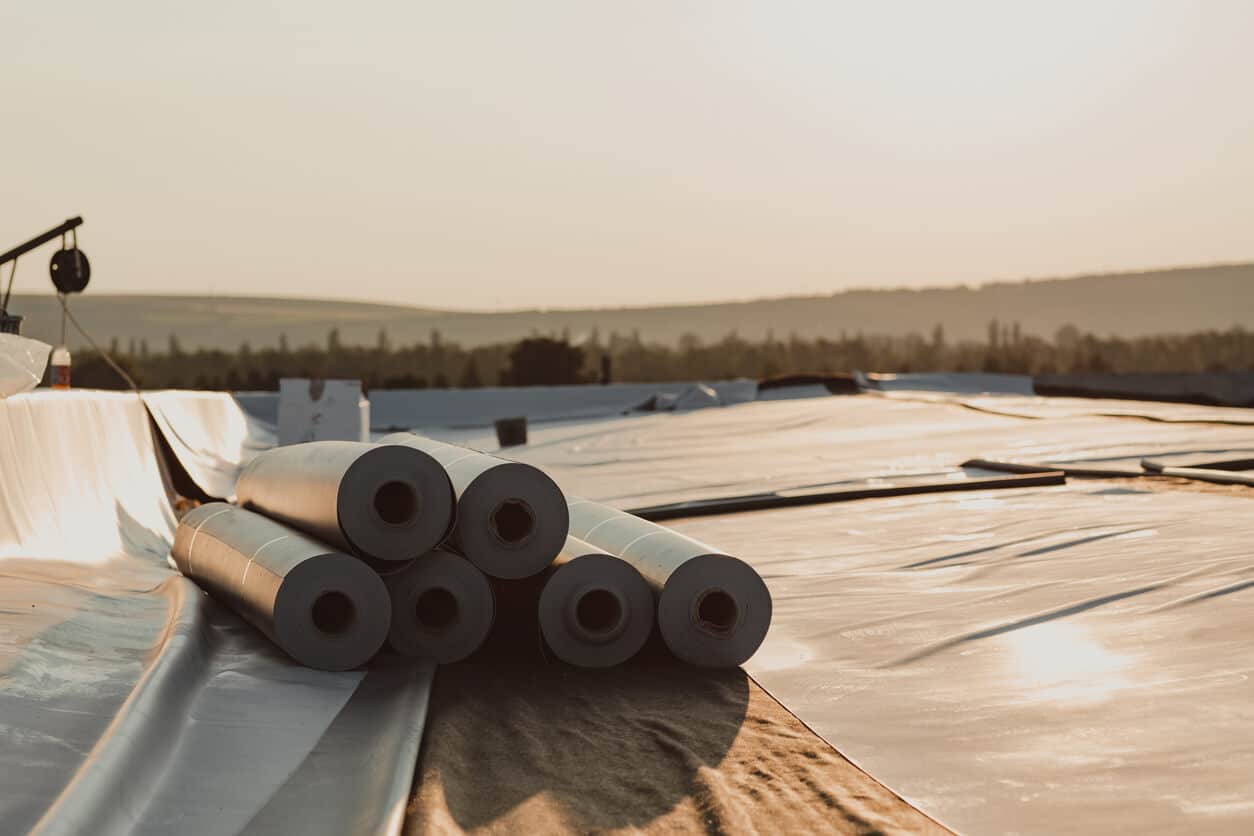
At its core, PVC roofing is a thermoplastic roofing membrane manufactured in large flexible sheets. Those sheets are installed over a prepared roof deck and insulation system to create a watertight surface on commercial and industrial roofs. Because it is a single ply system, the weatherproofing layer comes from one membrane rather than multiple built-up layers.
If you want the direct answer to what is PVC roofing, here it is: it is a durable commercial roofing material made from polyvinyl chloride that is designed to protect buildings from water intrusion, UV exposure, temperature swings, and in many applications, grease or chemical contact. PVC roofing membranes are especially common on restaurants, factories, warehouses, and other commercial buildings where performance matters more than appearances from the street.
Unlike some older roof systems, PVC membranes are heat fused at the seams. That means the overlap between sheets is welded together rather than simply glued. Think of it less like taping two pieces together and more like turning them into one continuous skin. That seam strength is a major reason PVC roofing systems are trusted on demanding flat roofs.
How PVC Roofing Membranes Are Made
Most PVC roofing membranes are made from layers of polyvinyl chloride combined with plasticizers, stabilizers, and reinforcement materials. That reinforcement is usually polyester or fiberglass, which helps the membrane maintain strength without becoming brittle. The result is a roofing membrane that can bend, move, and hold up under real-world conditions.
These PVC membranes are manufactured as PVC sheets and rolled out during installation. In commercial applications, the membrane is paired with insulation and attachment methods that suit the building. Depending on the design, the membrane may be mechanically attached, fully adhered, or in some systems, installed in a way that uses fastening patterns engineered for the site.
Some products also include PVC KEE, which stands for ketone ethylene ester. PVC KEE formulations are designed to improve long-term flexibility and durability. In many cases, PVC KEE products are selected for roofs where long-term performance under stress, chemical contact, or weather exposure is especially important.
Why PVC Roofing Is Popular on Flat Roofs
There is a reason PVC roofing shows up so often on flat roofs and low slope commercial structures. These roofs do not shed water the way steep-slope systems do. They need a membrane that can stand up to ponding tendencies, foot traffic, sun exposure, and the constant expansion and contraction that comes with changing temperatures.
That is where PVC roofing systems perform well. The membrane is lightweight compared to some multi-layer roof systems, but it is not flimsy. When installed correctly, it creates a continuous barrier that resists leaks and helps preserve the structural integrity of the building below. For many property owners, that combination of strength and flexibility is hard to ignore.
In Southeast Michigan, this matters even more. A commercial roof here may deal with heavy rain, snow loads, summer heat, and freeze-thaw cycles all within the same year. A roofing system that works in mild conditions but struggles in cold climates is not much use. PVC roofing is often chosen because it can handle extreme temperatures better than many people expect.
Key Benefits of PVC Roofing
One of the biggest benefits of PVC is seam strength. Since PVC membranes are typically heat welded, the seams form a watertight bond that is often stronger and more reliable than adhesive-only seam methods. On a commercial roof, seams are where many failures begin. Strong seams matter.
Another of the major benefits of PVC is chemical resistance. Some buildings, especially restaurants and manufacturing facilities, expose the roof to grease exhaust, airborne contaminants, or direct chemical exposure. PVC roofing is known for being resistant to chemicals, which is one reason it is commonly specified for industrial buildings and food-service properties.
The benefits of PVC also include strong fire resistance. Many PVC roofing systems are designed to be fire resistant, and they can help resist fire spread in ways that matter for code compliance and risk reduction. For owners of institutional buildings, warehouses, and multi-use commercial properties, that added fire resistance can be an important factor in system selection.
There is also the issue of maintenance. A properly installed PVC roof is generally considered low maintenance. It still needs regular inspections and proper maintenance, but compared to some older roof systems, it can offer a cleaner, more manageable service profile over time. That can help reduce disruption and lower the chance of costly repairs.
PVC Roofing and Energy Efficiency
If you are trying to lower operating expenses, energy efficiency is one of the strongest selling points of PVC roofing. Many white PVC roofing membranes reflect sunlight and reduce heat buildup on the roof surface. That reflective quality helps keep buildings cool, especially during the hottest part of summer.
This matters because lower roof surface temperatures can translate into lower cooling costs and lower overall energy costs. For large commercial buildings, even a modest improvement in thermal performance can make a noticeable difference month after month. That is why many owners look at energy efficient PVC roofing as part of a broader operating-cost strategy.
A reflective membrane can also support a more comfortable indoor environment. When the roof is not absorbing and radiating as much heat into the building, interior temperatures are easier to manage. That is especially useful for facilities with large open spaces, top-floor offices, or limited HVAC flexibility.
Some products may also align with Energy Star standards, depending on the membrane and assembly. Beyond utility savings, that can support sustainability goals and help reduce a building’s carbon footprint. In practical terms, energy efficient roofing is not just about being green on paper. It is about making the building work smarter.
PVC Roofing Installation Methods
There are several ways PVC roofing can be installed, and the right one depends on the building, the assembly, and the performance goals of the project. One common option is a mechanically attached system. In this method, the membrane is secured to the roof deck using plates and fasteners, often including heavy duty screws, before the seams are welded.
A mechanically attached system can perform well on many commercial roofs and may be a practical choice where wind uplift requirements and building design align. Some systems are also described as mechanically fastened, which refers to the same general idea of fastening the membrane into place rather than relying entirely on adhesive.
Another option is a fully adhered system. In this approach, the roofing membrane is bonded to the substrate with adhesive across the field of the roof. A fully adhered assembly can offer a cleaner appearance and different performance characteristics depending on the building. In some situations, membranes may also be chemically adhered to specific substrates as part of a specialized assembly.
You may also hear the term mechanically attached used when discussing perimeter details, edge securement, or hybrid assemblies. That is why proper installation matters so much. The membrane itself is only part of the equation. The attachment method, insulation layout, drainage design, and flashing details all affect how the roof performs over time.
What Makes Proper Installation So Important
Even the best roofing material can fail if it is not installed with care. Proper installation is what turns rolls of membrane into a functioning commercial roof. That means the roof deck must be evaluated, insulation layers must be set correctly, penetrations must be flashed with precision, and seams must be welded consistently.
This is where choosing an experienced roofing contractor matters. Commercial roofing is not a place for guesswork. On flat roofs, small mistakes do not stay small for long. A weak seam, poor edge detail, or drainage problem can invite leaks, insulation damage, and expensive downtime.
At Shain Roofing & Sheet Metal Inc., we believe roofs should be built the way they are expected to perform: carefully, completely, and without shortcuts. A PVC roof that is installed correctly is far more likely to deliver its intended service life and protect the building through years of weather and wear.
PVC Roofing vs TPO Roof Systems
Because the title of this article includes both systems, it is worth answering the comparison directly. PVC roofing and TPO are both thermoplastic single ply membranes used on commercial roofs. Both are common on flat roofs, both can be reflective, and both PVC and TPO are often chosen for their modern performance characteristics.
A tpo roof uses thermoplastic polyolefin, while PVC uses polyvinyl chloride. In broad terms, tpo membranes and PVC membranes can look similar from a distance, and both are often white, reflective, and seam welded. But they are not the same material, and they do not always behave the same way under stress.
One major difference is chemical resistance. PVC is generally known for stronger resistance in environments where grease, oils, or harsh contaminants may be present. That is why PVC is often preferred for restaurants or facilities with rooftop exhaust that may create chemical exposure. TPO can still be a strong option, but the building use matters.
Another point of comparison is long-term flexibility and formulation. Some owners also compare TPO to PVC KEE products when they want enhanced durability. Cost can differ as well. In some cases, a tpo roof may come with a lower initial investment, while PVC may offer performance advantages that justify the price on certain projects.
PVC Roofing vs EPDM
It also helps to compare PVC with EPDM, since many commercial owners are familiar with black rubber roofs. EPDM is a synthetic rubber membrane made from ethylene propylene rubber. You may also hear it referenced alongside epdm membranes on low slope buildings.
The difference is significant. PVC is a thermoplastic membrane with welded seams, while EPDM is a rubber membrane with seams typically sealed using tapes or adhesives. Both epdm and PVC can perform well when chosen for the right building, but they bring different strengths to the table.
PVC often stands out for chemical resistance, reflective performance, and strong seam welding. EPDM has a long track record and can be effective in many applications, especially where dark membrane performance is acceptable. The key is not deciding which material is universally “best,” but which is the right material for the building, budget, and exposure conditions.
Where PVC Roofing Works Best
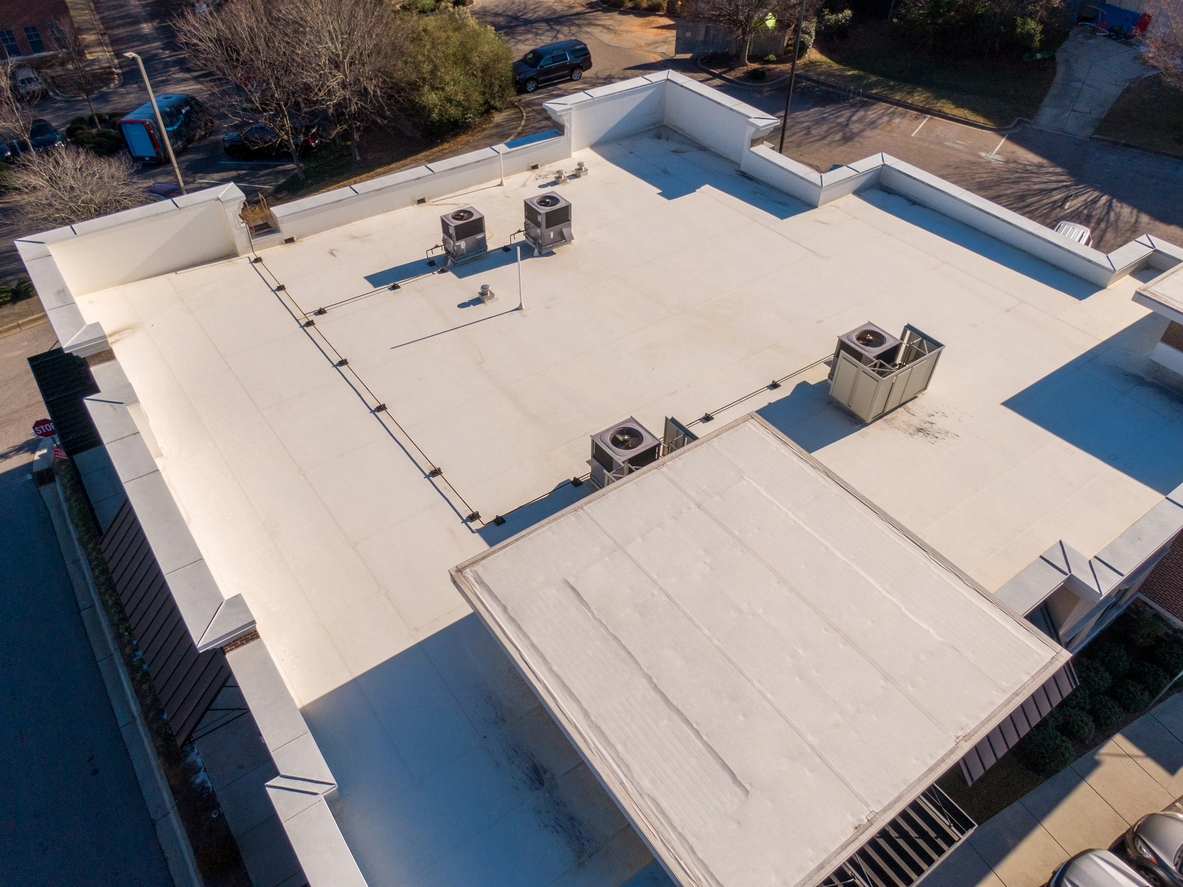
PVC roofing is often an excellent fit for commercial buildings, industrial buildings, and institutional buildings with flat roofs or low slope designs. Warehouses, medical facilities, schools, manufacturing plants, and retail buildings can all benefit from the membrane’s durability and low-maintenance profile.
It is especially useful where the roof may face grease, pollutants, or rooftop process exhaust. That is where being resistant to chemicals becomes more than a brochure line. It becomes part of the roof’s daily job. In these settings, PVC roofing systems can offer numerous benefits that justify the material choice.
While PVC is most associated with commercial use, there are also cases where it may be installed on residential homes with modern flat-roof sections. It is not the most common choice for every house, but in the right design context, it can be effective there as well.
How PVC Holds Up in Michigan Weather
Michigan roofs live a hard life. Between lake-effect weather patterns, snow, thaw, wind, and summer sun, the roof is always being tested. PVC roofing is attractive in this region because it handles cold climates, summer heat, and moisture exposure with a strong balance of flexibility and protection.
When a membrane is installed correctly, it can stand up to high winds, heavy rain, and seasonal movement. It is also highly resistant to many of the conditions that shorten the life of lesser systems. Add in good edge securement, proper drainage, and routine maintenance, and the roof has a much better chance of lasting.
That said, no roof is invincible. Falling debris, neglected drains, or ignored punctures can damage any membrane. That is why regular inspections matter, especially after severe weather or after other trades have been on the roof.
Fire Resistance, Durability, and Maintenance
Among the practical advantages of PVC roofing, fire resistance deserves another mention. For many owners, a fire resistant membrane adds peace of mind, especially on buildings with rooftop equipment or demanding occupancy types. PVC systems are also valued because they can help resist fire and maintain performance under difficult conditions.
Durability also extends beyond flame performance. PVC roofs are built to resist uv rays, standing water tendencies, and the wear that comes from service access. They are also less prone to issues like algae growth than some other roofing surfaces, which helps preserve performance and appearance.
As for upkeep, PVC is generally considered low maintenance, but not no-maintenance. Proper maintenance still includes drain checks, seam review, flashing evaluation, and prompt repair of punctures or damage. Those small efforts are what help avoid larger failures later.
Is PVC Roofing Worth the Cost?
For some owners, the sticking point is price. PVC can carry a higher initial investment than some alternatives. But judging a roof only by its installation price is like buying a truck based only on the monthly payment while ignoring fuel economy, payload, and repair history. The cheapest system up front is not always the cheapest roof over time.
When you factor in durability, energy efficiency, chemical resistance, and lower maintenance demands, PVC roofing can make strong financial sense. The value often becomes clearer on buildings where roof failure would interrupt operations, damage inventory, or create liability issues.
A commercial roofing project should be evaluated by lifecycle value, not just immediate price. The right system protects the building, supports operations, and reduces the chance of emergency leaks. That is the kind of math experienced property owners understand.
Final Thoughts on PVC and TPO Roofs
So, what is PVC roofing? It is a high-performance single ply roofing option made from polyvinyl chloride, designed for demanding commercial applications where seam strength, chemical resistance, energy efficiency, and durability matter. It is one of the most capable choices available for many flat roofs and low slope structures.
When comparing PVC and TPO, the best answer depends on the building. Both are modern thermoplastic roof systems, and both can work well. But PVC often has an edge in harsh-use environments, especially where contaminants, grease, or long-term exposure are part of the picture.
If you are planning a roofing project in Livonia, Metro Detroit, or anywhere in Southeast Michigan, the smartest next step is to speak with a qualified roofing contractor who understands commercial systems in the real world, not just on paper. At Shain Roofing & Sheet Metal Inc., we help property owners choose roof systems that fit the building, the budget, and the conditions the roof will actually face.
A commercial roof should not be a gamble. It should be a system built to work, season after season, storm after storm. If you are weighing PVC, TPO, or another commercial roofing option, our team is here to help you make the call with confidence.
Related Posts